
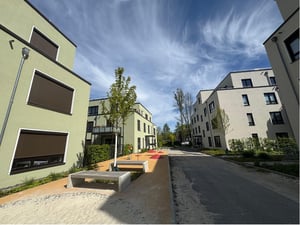
If you want a glimpse of where housing is heading over the next decade, you don’t need to look far—the answers were all on display at this year’s Passive House Conference in Essen, Germany.
Iga our Associate Architect and Passive House Specialist, recently attended the conference—and came away with plenty to reflect on. It’s always valuable to step outside the day-to-day of projects and see how the wider industry is evolving, particularly when it comes to low-energy design, retrofit, and the future of housing.
What stood out this year wasn’t just the innovation on display, but the consistency of the message: the path to better-performing buildings is already clear. It’s about applying that knowledge early, clearly, and consistently.
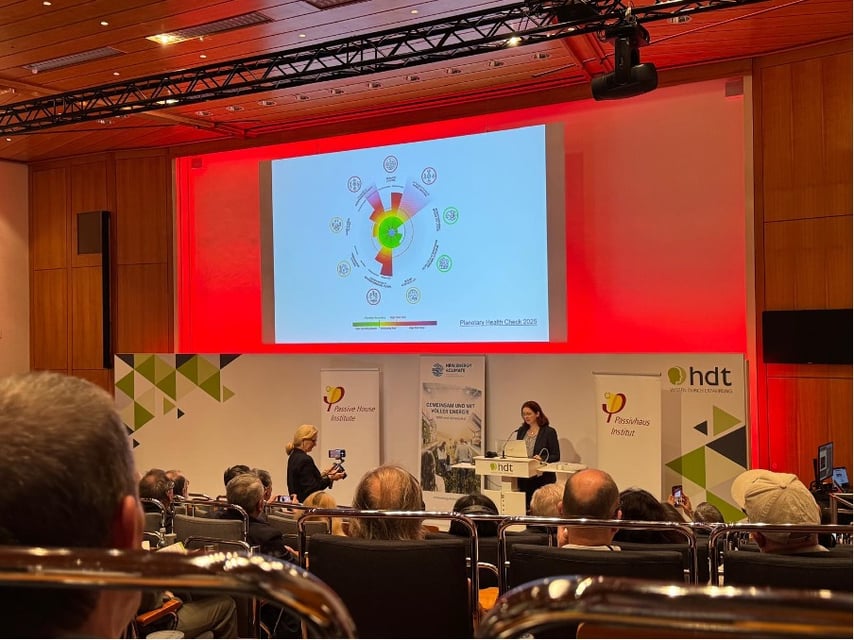
The conference opened with a thought-provoking discussion around Passive House as part of a wider response to the “degrowth” conversation. While that might sound theoretical, the underlying message was practical—our approach to building needs to be grounded in physics, ecology, and a more careful use of resources.
There’s a clear alignment here with national policy. Germany is targeting an 80–90% reduction in carbon emissions by 2045, and the UK is moving in a similar direction. With the Future Homes Standard expected to come into force and Scotland progressing towards a Passive House equivalent standard around 2028, the direction of travel is unmistakable.
For anyone planning a self-build or renovation, this isn’t something happening in the distance—it’s happening now. The homes being designed today need to be ready for that future, not just compliant at the point of construction.

RETROFIT AS A PRACTICAL SOLUTION
One of the most relevant themes for homeowners was retrofit, particularly to the EnerPHit standard. While new-build standards continue to improve, the reality is that the majority of homes already exist—and improving them is where a huge opportunity lies.
What makes EnerPHit particularly compelling is its flexibility. It doesn’t require a “rip everything out and start again” approach. Instead, improvements can be phased, focusing on what delivers the greatest impact first.
The benefits are tangible and immediate:
- Lower energy bills
- Consistent, comfortable internal temperatures
- Improved air quality
- Elimination of damp and mould issues
Using tools like PHPP early in the process allows for informed decision-making—helping identify which upgrades are worth investing in and which are not. It’s a more measured, intelligent approach to retrofit.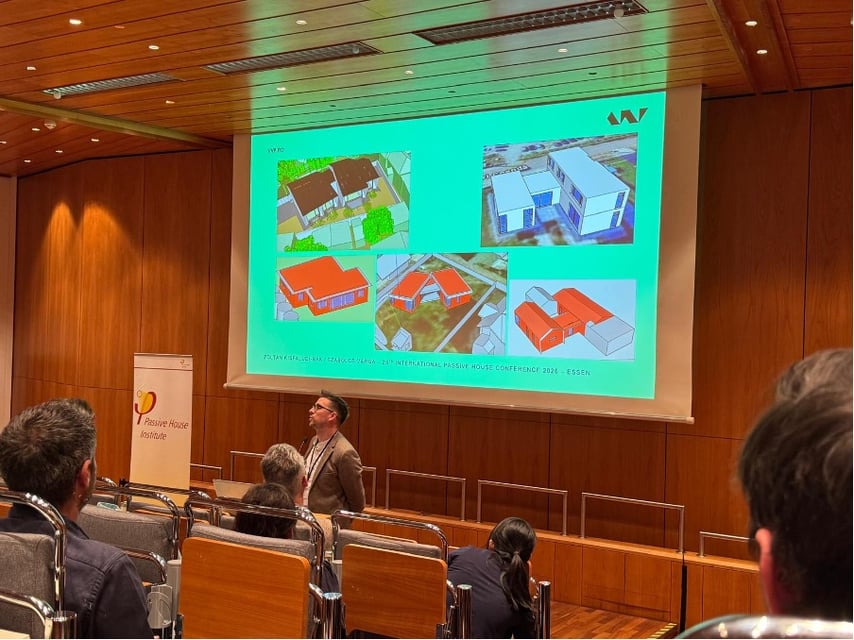
DESIGN MATTERS: SIMPLICITY AND PERFORMANCE
A standout session explored something we often discuss with clients—the relationship between building form, performance, and cost.
The findings reinforced a simple but powerful principle: simpler building forms tend to perform better and cost less to build.
It’s easy to underestimate how much impact early design decisions have. Complex shapes increase heat loss, add construction complexity, and often drive up costs. In contrast, well-considered, simple forms are easier to build, easier to make airtight, and more efficient to run.
It was encouraging to see this backed up with clear, data-driven comparisons. A useful reminder that good design isn’t just about how a building looks—it’s about how it performs over its lifetime.
LEARNING FROM GLOBAL PERSPECTIVES
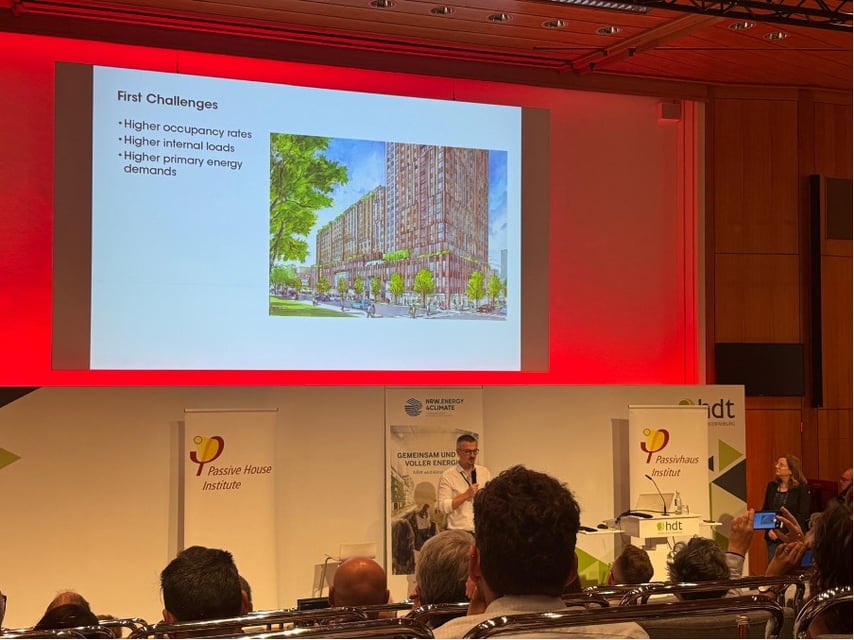
Throughout the conference, we saw a wide range of case studies—from large-scale residential developments to smaller housing projects across Europe and beyond.
What was clear is that delivering high-performance buildings isn’t limited to specialists or one-off schemes. With the right approach, the results are consistently achievable.
Across all projects, the same principles kept appearing:
- A fabric-first approach
- Early integration of ventilation strategies
- A clear focus on measurable performance
These are the same fundamentals we apply across our own projects and it’s reassuring to see them validated on a global stage.
POLICY, PROGRESS AND WHAT ITS MEANS FOR THE UK
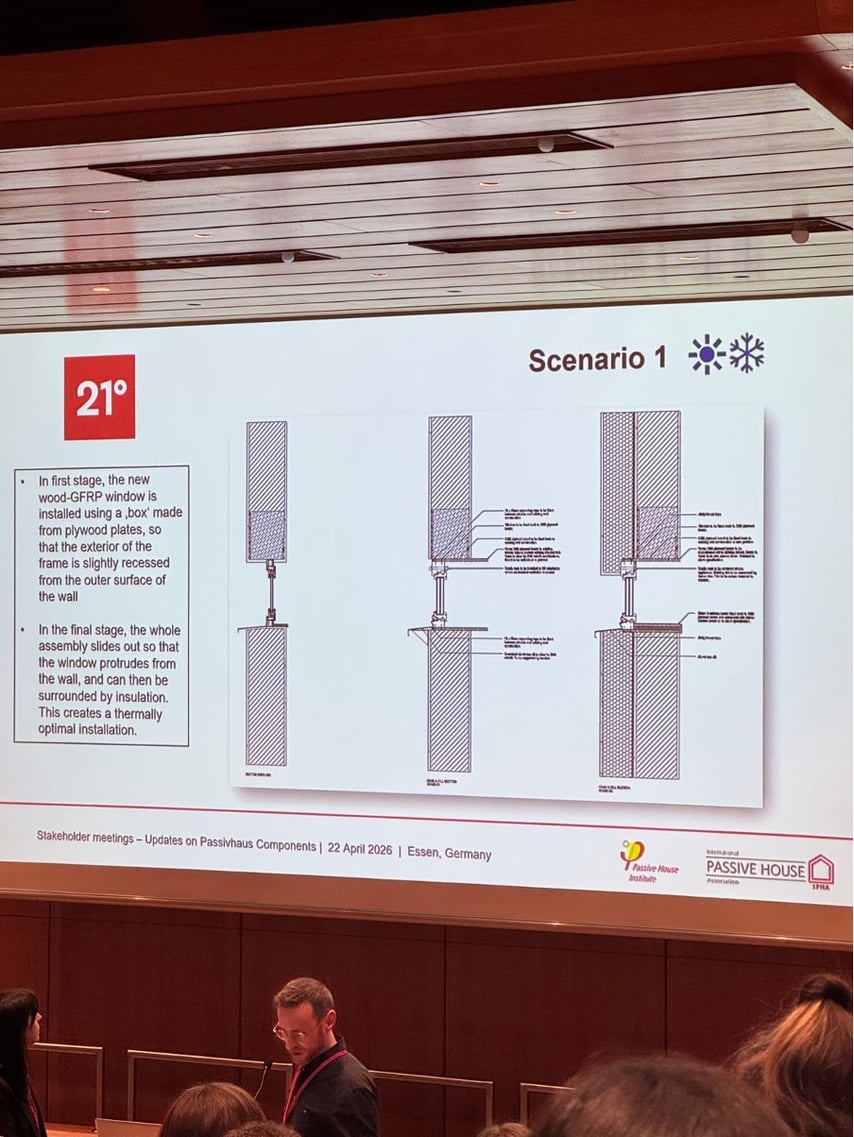
There was also plenty of discussion around policy, particularly in relation to the Energy Performance of Buildings Directive (EPBD) and how different countries are responding to the challenge of net zero.
Closer to home, the momentum is building. Scotland’s proposed Passive House equivalent standard and the UK’s Future Homes Standard both signal a shift towards higher performance expectations.
For self-builders, this will translate into real, practical changes:
-
Moving away from fossil fuel heating
-
Higher levels of insulation and airtightness
-
A greater emphasis on performance from the outset
In many ways, these are changes we’re already designing for—it’s just that regulation is now beginning to catch up with best practice.
SEEING IT IN PRACTICE
The final day of the conference brought everything together with a series of building tours.
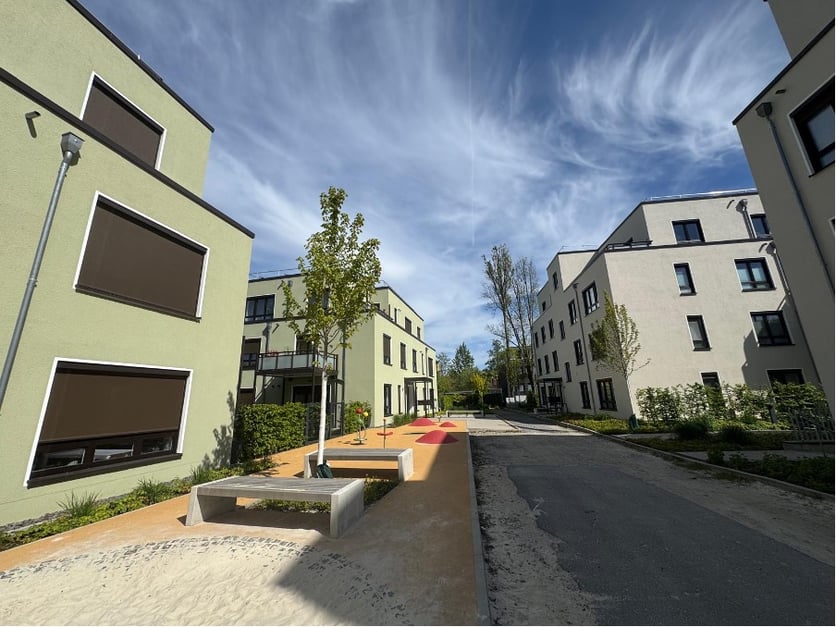
We visited a cooperative housing development in Essen, a student residence in Bochum, and a multi-family housing project in Dortmund. Each one demonstrated how Passive House principles can be applied across different residential types, without compromising on design quality or usability.
Seeing these buildings in use is always the most valuable part—it moves the conversation from theory to reality.
The key takeaway from this year’s conference is a simple one: we already know how to design and build better homes.
The tools are there. The knowledge is there. The examples are there.
The challenge—and the opportunity—is applying that thinking consistently, starting from the very earliest design stages.
For us, it reinforces what we aim to deliver on every project: homes that aren’t just well-designed visually, but perform exceptionally well—comfortable to live in, efficient to run, and built for the future.
If you would like to speak with a member of our team about designing your home, get in touch.
