Pictston Farm in Glenalmond
Set within approximately 78 acres of predominantly Grade 3.2 agricultural land, Pictston Farm is currently used for small-scale grazing.
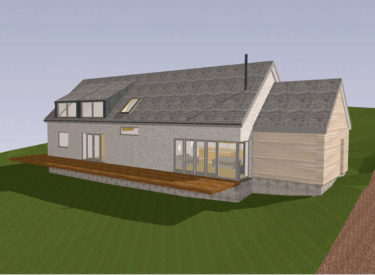
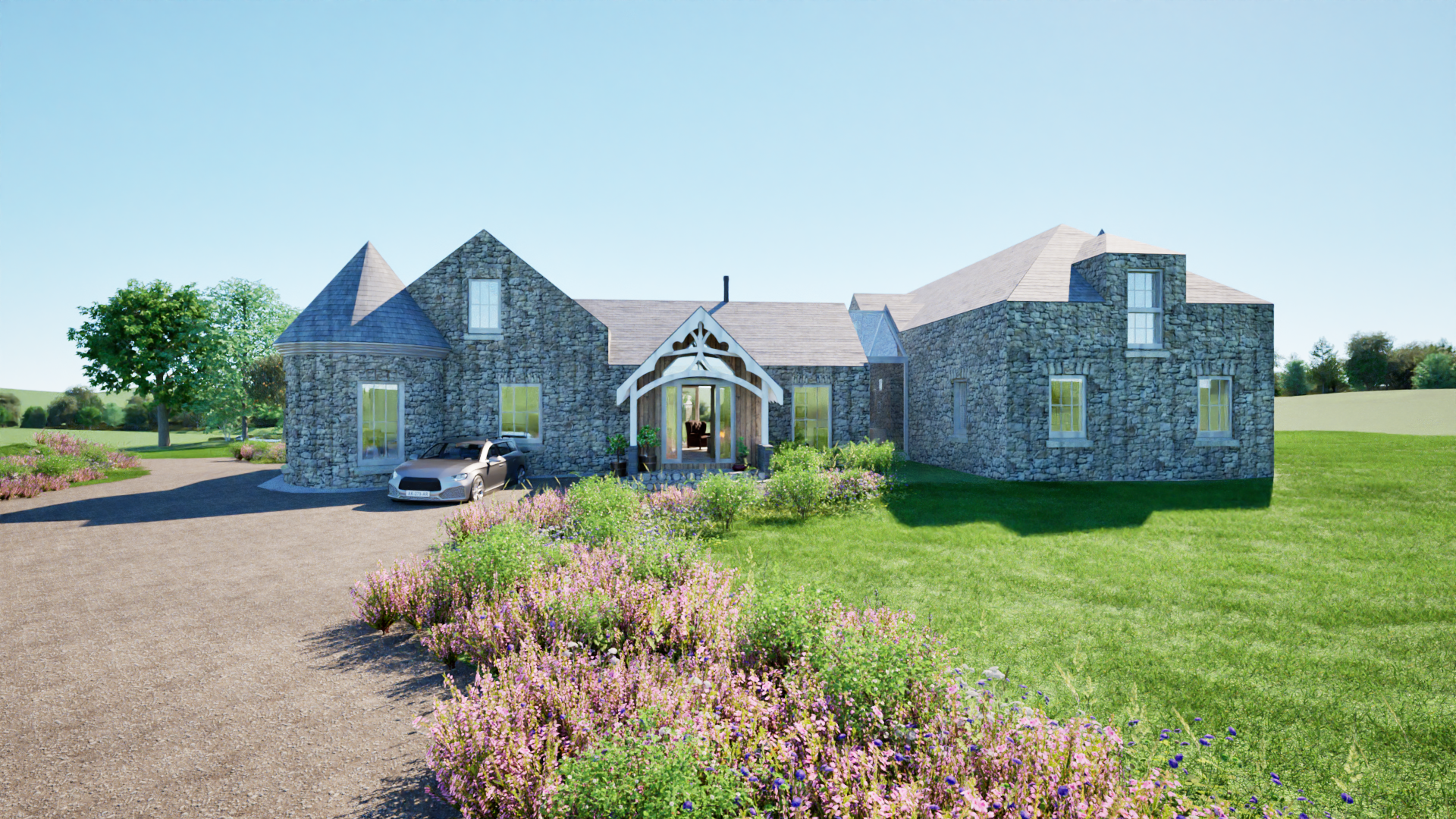
The existing farmhouse, constructed in concrete block with roughcast render and a concrete tile roof, is in poor condition and no longer fit for purpose. The proposal therefore seeks to demolish the dilapidated farmhouse and instead convert and extend the existing traditional outbuilding to create a new, energy-efficient dwelling suited to modern family living and the operational needs of the farm.
In addition, new agricultural storage buildings are proposed approximately 400 metres to the east of the residential curtilage. This separation ensures a clear distinction between working and living areas, reducing noise and operational impact while improving the functionality of the farm. Access to both the farmhouse and the approved agricultural sheds will also be upgraded and widened to improve safety and usability.